
The Fires We Tend
Choosing Warmth Over Consumption

Publishing Date: February 10, 2026
The First Draft explores systems, institutions, technology, and the human realities of living inside them. Essays, field notes, and practical frameworks from the intersection of work, identity, and change.
New here? Start with the Pathways archive.
This essay belongs to the 5 - Returning to land and rhythm and 7 - Becoming yourself in public pathways.
Though the nature of my writing might betray me, I do not consider myself a sentimental person.
I’ve had reminders of this over the years. Once, a relative I am in no contact with insisted I come collect a box of old belongings. I told them they were welcome to have a bonfire with it if they felt strongly about it, and the box arrived on my doorstep anyway, unwelcome. It confirmed something I already knew: I’m not sentimental in the ways people expect, and my boundaries tend to hold.
That’s the shape of my temperament. I may enjoy poetic, florid writing and vivid images as someone with an academic arts background, but I don’t think about life in idyllic terms.
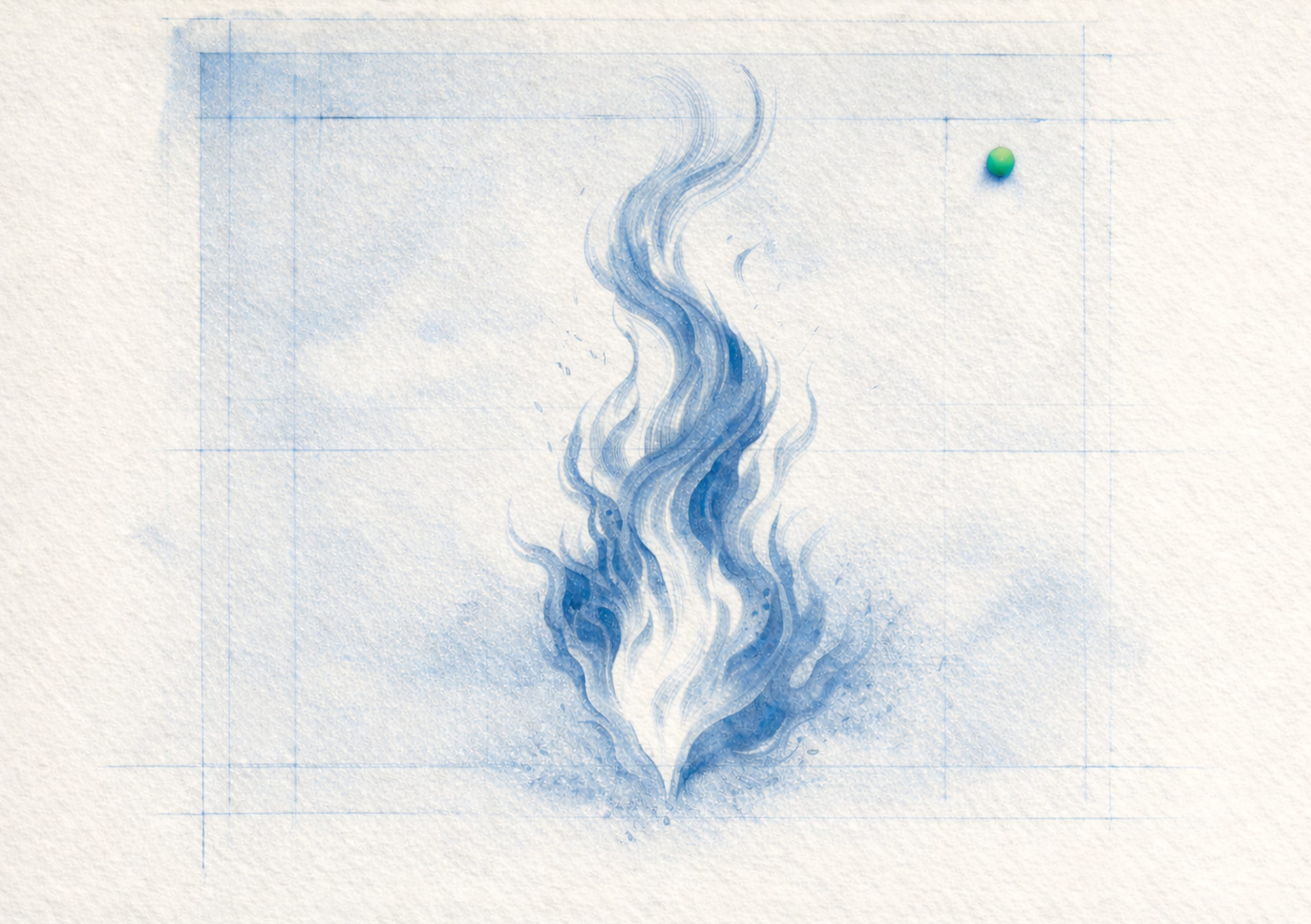
Fire has played a role in my life for as long as I can remember. It’s something I’ve consciously tended inside myself and inside others. It’s also something I’ve used to clear the field.
Today, the publishing date of this essay, is my 40th birthday. People keep asking me about its significance, given the amount of change I’ve gone through in the last couple of years.
I am completely unbothered about turning 40. I have lived my life intentionally, and much like when I turned 30 and woke up at 26 and realized I needed to change my life, at 35, I began making the changes that have set my life on a course I’m reasonably satisfied with. Forty is a marker rather than a significant event that I judge my life against.
I dislike the genre of “40 Things I Learned Before 40” or “40 Truths I Now Know.” I’m not sure there’s ever any there there. Life is never finished. Insight is never complete. The goalpost always moves.
What I do believe, borrowing a term from Gretchen Rubin, is that there are “secrets of adulthood.” I’ve collected these over time, and I often share them with my students.
We are all subject to inertia.
The rest of life really is high school with money. (Sometimes attributed to Frank Zappa, but likely a misquote.)
Our job is to figure out what we enjoy, and slowly move toward more of that and less of what we don’t.
And, at networking events, most people simply want someone to talk to.
These truths have shaped how I understand fire, not only the fires I tend, but the ones that tend me.
And that understanding begins with the fires we never chose.
The Unchosen Fires We Inherit
We are all products of our family systems, of our early lives, and of choices we made long before we understood their implications. We each inherit roles, for example, my role as an eldest daughter, and we end up pantomiming these roles for the rest of our lives, at least until we interrupt ourselves.
These roles come with emotional labour, both conscious and unconscious. The same patterns that once played out at kitchen tables now play out in offices, meetings, and boardrooms. Unless we intervene, we can live our lives repeating the same inherited scripts in different rooms with different people, mistaking repetition for agency.
There are also the fires that shaped us through heat rather than inheritance.
The Fires That Burned Us
As an eldest daughter, overwork and over-functioning became my drug of choice. I believed that to be as successful as possible, I needed to give 110% to my job and to the people around me.
One autoimmune disease and a lifetime of necessary naps later, I understand that the need to overwork, self-curate, and fold our emotions into tiny boxes is not rooted in the present. These are echoes of our histories, not reflections of what our current lives are actually asking of us.
What we owe the people around us is often so much more, and so much less, than we imagine. And it’s worth interrogating where we put our limited energy.
But alongside those destructive patterns were the fires that sustained me.
The Fires That Kept Us Alive
Work that mattered.
Curiosities that moved me forward.
Friendships and chosen family.
The quiet, sustaining forces that gave just enough oxygen to keep going.
These are the sparks that accumulate over time and grow into a larger life. They become vocation and destiny. Staying curious, exploring, growing, noticing, keeps the interior fire alive when so many let theirs go out from exhaustion or defeat.
The Fires We Choose Now
And now, in middle age, the fires I choose look different.
They are rooted in mutuality.
In sovereignty.
In clarity, and deep, loving care.
A mentor recently told me I need to stop protecting myself from my own life, and I understood exactly what she meant. The fire I tend now demands more presence than caution, more warmth than withdrawal.
I’ve learned that good fires require good boundaries. They need structure to protect what matters most. And what matters most to me now is building a self that values well-being over the things I valued before.
I’m more interested in the legacies I build and the systems of reciprocity that grow around me, the things I tend over time, rather than the day-to-day churn. My inner world seems to want to play the long game.
A Philosophy of Attention
And perhaps because I’m standing exactly at mid-life, I’m newly aware that there is as much life behind me as there is ahead of me. Which means I have to pay closer attention to how I spend my days.
Days accumulate into a whole life.
What we repeat, maintain, and allow becomes the narrative we build and the stories we tell.
I want to know that when I look back at the end of my days, I’ve given my life to something that matters, but that I also mattered to myself.
So instead of choosing fire as a force of change, I choose warmth over consumption. I choose days with people I want to be around. I choose building a life that feels worth living. And most of all, I choose to have choices.
I come from a place of great privilege in that I often can choose how my days happen, even though I have as many meetings, texts, and emails as anyone else. Not everything is a choice. But many things are.
I may not know where the next decade will take me, but I know that my choices will matter more and more over time. What I can do is pause, warm myself by the fire I’ve built, and contemplate the next fire I will light and the next fire I will tend.
Warmth, Not Consumption
I may not think of myself as sentimental, but I like stories of homes and warmth and family. Stories of comfort, purpose, and value.
And I like the story my life is beginning to tell.
Next Step: A Way to Practice This in Your Life
Systems-mapping as sense-making
On a blank page, sketch the systems that currently draw on your energy. Include work, relationships, and inner narratives. Circle the parts that feel reciprocal and underline those that feel extractive or unwanted.
Reflections might include:
Fires inherited
Fires that burned you
Fires that kept you alive
Fires you are choosing now
This reflection is designed to help you see patterns of continuity and change in how you give your life away.
PS: If you want to support this work: restack it, share it, or drop a quick comment. It helps more than you’d think, and it keeps me writing and helping other changemakers. (This one’s public—feel free to send it on.)
Further Reading & Context
I share books and sources here because I think the legacies people work from matter, and because good writing deserves a longer conversation than one essay can hold. Some of these informed this piece directly. Others are invitations to go deeper into the territory it opens. You can browse my full reading list, organized by theme to see the broader intellectual foundation this newsletter draws from.
Some links below are Amazon.ca affiliate links. I also include Chapters Indigo, Kobo, and WorldCat so you can support a Canadian bookseller or find it at your library instead. I earn a small commission if you buy through affiliate links at no extra cost to you.
hooks, bell, All About Love (2000) A grounded exploration of care, boundaries, and love as a practice rather than a feeling.
Hollis, James, Finding Meaning in the Second Half of Life (2005) A depth-psychological look at midlife as a period of reorientation and conscious choice.
Illich, Ivan, Tools for Conviviality (1973) Reflections on systems, limits, and the difference between sustaining tools and consuming ones.
Le Guin, Ursula K., The Carrier Bag Theory of Fiction (1986) A reframing of value away from conquest and consumption toward tending and holding. Possible lineage.
Oliver, Mary, Upstream (2016) Essays on attention, choice, and what it means to live deliberately. One of my favourite poets. Also see, Wild Geese, which I have framed on my office wall.